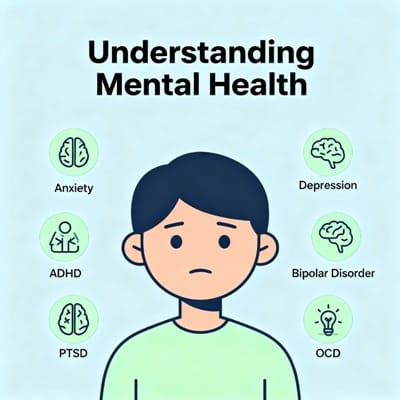

🌱 7 Daily Habits to Improve Mental Health Naturally
Introduction:
Mental health isn’t about making big changes overnight. Often, it’s the small, consistent habits that help us stay balanced, calm, and emotionally strong. You don’t need to wait for a therapist or a perfect plan — your journey toward peace can begin right now, with simple daily actions that nourish your mind and soul.
Think of these habits as gentle tools: you can start with one or two, slowly add more, and shape a routine that matches your real life, work, and energy.
Instead of reaching for your phone the moment you wake up, give yourself 10 minutes to stretch, breathe, or just sit quietly. This simple act helps your nervous system relax and sets a peaceful tone for the rest of the day. Early-morning notifications and social media can immediately trigger stress and comparison — a quiet start protects your inner space.
You can begin with just 5 minutes of slow breathing or gentle stretching and slowly increase it as you feel comfortable.
Try using a Breathing Timer from Mind Care Journey to start your morning with calm, focused breathing instead of social media noise.
Your brain and body are mostly water. After a full night of sleep, they need gentle hydration. Drinking a glass of water before coffee supports focus, reduces fatigue, and helps you feel more alert — naturally, without relying only on caffeine.
Add a slice of lemon, cucumber, or a pinch of rock salt (if suitable for your health) to make it more refreshing and enjoyable. Over time, this small change can support better digestion, energy, and clarity.
You don’t need a gym membership to clear your mind. A short walk in fresh air — even just 10 minutes — can improve mood, reduce mental fog, and help you feel more connected to your surroundings. Regular movement supports your brain in releasing endorphins, often called “happy hormones.”
🧘♀️ Recommended: Try walking or doing light yoga on this Anti-Slip Yoga Mat to keep your posture balanced and your body grounded while you move or stretch at home.
Gratitude isn’t just a “positive thought” — it’s a gentle practice that trains your brain to notice what is working, even when life is not perfect. Writing down three things you’re thankful for each day can gradually support a more hopeful mindset.
Your list can be very simple: a kind message, a good meal, a peaceful moment, or a lesson you learned. What matters is consistency, not perfection.
✨ Try This: The 5-Minute Gratitude Journal is a simple and practical way to make gratitude a daily habit without feeling overwhelmed.
What you feed your mind shapes your emotions. Continuous doom-scrolling, upsetting news, or toxic online content can increase anxiety, anger, or a sense of helplessness. Choosing what you see and hear is also a form of self-care.
Instead of filling your space with noise, try gentle music, nature sounds, uplifting talks, or silence. Create small “no-screen zones” — for example, no phone while eating or during the first and last 20 minutes of your day.
🌸 Recommended: Create a calmer atmosphere with this Aromatherapy Diffuser Kit — it can help your room feel more relaxing and support a focused, peaceful state of mind.
Human connection is powerful. Even a short, honest conversation with a trusted person can lighten your emotional load. You don’t have to share every detail — simply saying “I have been feeling heavy lately” is a meaningful start.
If you don’t feel ready to talk to someone you know, consider writing your feelings in a notebook or seeking support from a counselor or helpline. The important thing is: you do not have to carry everything alone.
When anxiety rises, breathing often becomes shallow and fast. Simple breathing practices can help your body slow down and feel safer. One gentle method is the 4-7-8 breathing technique:
- Inhale slowly through your nose for 4 seconds,
- Hold your breath for 7 seconds,
- Exhale gently through your mouth for 8 seconds.
Repeat this 3–4 times. Many people find they feel more grounded and relaxed afterward. If you feel dizzy or uncomfortable, shorten the counts and breathe at a rhythm that feels kind to your body.
Need help practicing? Use our Breathing Timer for Deep Practice — it guides your breath rhythm visually and makes mindfulness easier to follow.
🧘♂️ Option to Explore: The Muse Meditation Headband uses real-time brainwave feedback to support a more consistent meditation habit. It is a wellness tool, not a medical device, and should be used as part of a broader self-care routine.
Good mental health is closely linked with good-quality sleep. Simple changes like dimming lights, avoiding screens before bed, and reading something light and positive can prepare your mind to rest.
Some people also find gentle, non-habit-forming sleep aids helpful — but they should be used carefully and with guidance, especially if you have health conditions.
🌙 Option to Explore: Vicks ZzzQuil Natura Sleep-Aid Gummies contain Melatonin and are designed to support restful sleep. They are not a cure for sleep disorders and should be used as directed on the label. If you have ongoing sleep issues or medical conditions, please talk to a doctor first.
Along with healthy everyday habits, nature also offers traditional support. Ashwagandha — a well-known Ayurvedic herb — is often used to help the body adapt to everyday stress and support emotional balance.
Important: Ashwagandha is not a cure for mental illness or severe anxiety. It may be helpful for some people as part of a healthy lifestyle, but it should not replace therapy, medical treatment, or professional advice.
🌿 Suggested to Explore: Ashwagandha Supplements — commonly used as a natural stress-support option. Always check the label, dosage, and quality, and discuss with a healthcare professional if you are on medication, pregnant, or have any medical condition.
🌟 Conclusion
You don’t need an expensive routine or long, complicated plans to take care of your mind. The real secret lies in consistency and self-kindness. Just a few small, mindful actions — practiced daily — can gently transform your emotional health over time.
Start today with one simple habit from this list. Notice how you feel after a week, then a month. Your future self will thank you for every small step you take toward balance, peace, and mental strength.
The information in this article is meant for general education and mental wellness awareness. It is not medical advice, diagnosis, or treatment. If you are experiencing persistent sadness, anxiety, sleep problems, or any symptoms that worry you, please consult a qualified doctor, psychologist, or mental health professional. Never stop or change any prescribed medicine without your doctor’s guidance.
This post contains affiliate links. If you buy through these links, I may earn a small commission — at no extra cost to you.
I only recommend genuine, research-backed, and trusted wellness products that align with the mission of Mind Care Journey.
These small commissions support our work and help us keep sharing free mental wellness content for everyone.