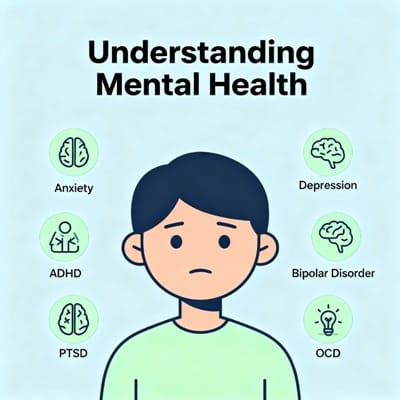

Understanding Mental Health: Complete Guide to Emotional Well-being
A comprehensive, practical overview of mental wellness, early signs, and simple daily actions you can start today.
Table of Contents
What is Mental Health?
Mental health refers to a person’s emotional, psychological, and social well-being. It affects how we think, feel, and behave in daily life. Good mental health helps us handle stress, build healthy relationships, make decisions, and contribute to our family and community.
Mental health is not just the absence of mental illness. It is a positive state of well-being where a person:
- Understands their own abilities.
- Can cope with normal stress in life.
- Works productively at home, work, or school.
- Contributes meaningfully to society.
Mental health exists on a spectrum and changes over time. Some days you may feel balanced; on other days you might feel low or stressed. This is normal as long as you are able to recover and function. When difficulties stay for a long time and affect daily life, support is needed.
Importance of Mental Well-being
Maintaining mental wellness is essential for overall health. When your mind is in a healthy state, you can think clearly, handle emotions, and respond better to challenges. Good mental health supports:
- Physical Health: Poor mental health can affect sleep, appetite, and immunity, increasing the risk of physical illnesses.
- Relationships: A stable emotional state helps you communicate better and maintain healthy connections with family, friends, and colleagues.
- Work and Studies: Mental wellness improves focus, creativity, and productivity.
- Life Satisfaction: It becomes easier to feel joy, hope, and purpose in life.
Ignoring mental health can, over time, lead to conditions such as depression, anxiety, substance use, or burnout. Early awareness and small lifestyle changes can prevent many serious difficulties later.
Difference Between Mental Health and Mental Illness
Mental health is the overall state of your emotional and psychological well-being. Mental illness refers to medical conditions that affect mood, thinking, and behavior, such as depression, anxiety disorders, bipolar disorder, or schizophrenia.
A person can have poor mental health without having a diagnosable mental illness. For example, someone may feel stressed, overwhelmed, or emotionally exhausted due to financial problems or family conflict.
Similarly, a person living with a diagnosed mental illness can live a meaningful, productive life when they receive appropriate treatment, support, and follow healthy routines.
Understanding this difference helps reduce stigma. Mental health is for everyone, not only for those with a diagnosis. We all need to take care of our minds, just like we take care of our bodies.
Factors Influencing Mental Health
Mental health is shaped by a combination of biological, psychological, social, economic, and environmental factors. No single factor works alone.
Biological Factors
Genetics, brain chemistry, hormones, and physical health conditions can influence how we feel. Some people may have a family history of certain mental health conditions, which can increase vulnerability.
Psychological Factors
Early childhood experiences, personality style, self-esteem, and coping skills play an important role. Unresolved trauma or long-term stress can make a person more sensitive to emotional difficulties.
Social and Family Factors
Supportive relationships, a sense of belonging, and healthy family communication protect mental health. On the other hand, violence, neglect, conflict, or discrimination can harm it.
Economic Factors
Job insecurity, unemployment, debt, and lack of access to basic needs (food, housing, healthcare) create constant pressure, which can lead to anxiety or depression.
Environmental Factors
Safe neighborhoods, access to green spaces, reduced noise, and a clean environment can improve mood and relaxation. Crowded, unsafe, or polluted surroundings can have the opposite effect.
Common Signs of Poor Mental Health
Everyone experiences ups and downs, but when certain signs continue for weeks and start affecting daily life, they may indicate a mental health concern:
- Persistent sadness or emptiness that lasts most of the day.
- Loss of interest in activities that used to be enjoyable.
- Difficulty concentrating or making simple decisions.
- Changes in sleep – sleeping too much or too little.
- Changes in appetite – eating more or less than usual.
- Constant worry, fear, or restlessness.
- Feeling tired all the time, even after rest.
- Feeling irritable, angry, or frustrated over small things.
- Unexplained physical symptoms such as headaches, body pain, or stomach issues.
If you or someone you know is experiencing these signs for more than two weeks, it is a good idea to talk to a trusted person or seek professional support.
How to Improve Mental Wellness
Taking care of mental health is a daily practice. You do not need big changes; small, consistent steps work best. Here are some simple, practical strategies:
1. Move Your Body Regularly
Exercise helps release feel-good chemicals in the brain. Try:
- Walking for 20–30 minutes a day.
- Stretching or light yoga at home.
- Dancing to your favorite music.
2. Eat Balanced Meals
Include fruits, vegetables, whole grains, and adequate water. Heavy junk food, too much sugar, or caffeine can sometimes make anxiety and low mood worse.
3. Protect Your Sleep
Try to sleep and wake at similar times every day. Avoid screens right before bed and create a simple night routine like reading, prayer, or light stretching.
4. Practice Mindfulness and Relaxation
Simple breathing exercises or short guided meditations can calm the mind. Even 5 minutes of deep breathing – inhale slowly, exhale slowly – can reduce immediate stress.
5. Stay Connected
Talk to a friend, family member, or support group regularly. Sharing feelings, even in simple words, reduces emotional burden.
6. Set Boundaries and Manage Your Energy
It is okay to say “no” when you feel overloaded. Prioritize what truly matters and limit unnecessary stress from social media, arguments, or overwork.
7. Create a Simple Daily Routine
Mental health improves when life has structure. Divide your day into small blocks – personal care, work/household tasks, rest, and something you enjoy. Even a basic written routine gives the mind a sense of safety and control.
8. Seek Professional Help When Needed
If your feelings become too heavy, it is a sign of strength – not weakness – to ask for help. Counselors, psychologists, psychiatrists, or helplines can guide you with tools and treatment.
Recommended Wellness Tools
Some people find it helpful to use simple tools and products as part of their mental wellness routine. These do not replace professional care but can support daily self-care:
Used traditionally to support calmness, sleep, and resilience to stress.
View ProductWrite daily reflections to clear your mind and focus on positives.
View ProductCreate a comfortable, dedicated corner for meditation or prayer.
View ProductUse gentle fragrances to create a calming, peaceful environment at home.
View ProductAffiliate Disclosure: Some links may be affiliate links. If you purchase through them, we may earn a small commission at no extra cost to you. This helps support our work in creating mental health resources.
Conclusion
Mental health is not a luxury – it is a basic part of health, just like heart or liver health. By understanding it better and taking small daily steps, you can build emotional strength over time.
Remember, you do not have to “fix everything” in one day. Start with one simple habit: a 10-minute walk, one honest conversation, or writing your thoughts. Small actions repeated daily create long-term change.
If you feel stuck, confused, or alone, reaching out for help is a sign of courage. Your feelings are valid, and support is available.
Frequently Asked Questions
Mental health self-care works best when done daily, even in small ways. Aim for at least 5–10 minutes each day – stretching, journaling, breathing exercises, or a short walk.
Yes. Research shows that sleep, nutrition, movement, and social connection all affect mood and stress levels. These may not replace professional treatment when needed, but they make the mind more resilient.
If difficult feelings last more than two weeks, interfere with your daily life, or you feel unsafe, it is important to seek professional help. You do not have to wait until things become “very bad” to reach out.
Natural supplements like Ashwagandha can support stress management for some people, but they are not a replacement for medical care in serious conditions. Always talk to a doctor before starting any supplement.
Medical Disclaimer: This article is for information and awareness only. It is not a substitute for professional diagnosis, treatment, or emergency care. Always consult a qualified doctor, psychologist, or mental health professional if you are concerned about your or someone else’s mental health.