💪 The Power of Physical Activity in Boosting Mental Health
Physical activity is far more than a way to stay fit — it’s one of the most reliable tools to support your emotional balance, focus, and overall sense of well-being. Moving your body daily can help you think clearly, handle stress better, and feel more confident in your everyday life. Whether you prefer walking, stretching, or dancing, every small movement sends a positive signal to your mind that you’re taking care of yourself.
🧠 What Happens Inside the Brain When You Exercise?
When you move, your brain releases natural “feel-good” chemicals such as endorphins, dopamine, and serotonin. These neurotransmitters are responsible for boosting motivation, joy, and calmness. At the same time, exercise helps lower cortisol — the stress hormone that often causes anxiety, irritability, and fatigue. Over time, this chemical balance improves emotional stability and cognitive performance.
Exercise also increases blood flow to the brain, delivering more oxygen and nutrients that support memory and creativity. Many people describe post-workout clarity as “mental refresh,” and this isn’t just a feeling — it’s a biological response that strengthens the brain’s learning and focus centers.
💚 Key Mental-Health Benefits of Regular Physical Activity
- ✔️ Helps reduce mild symptoms of anxiety and low mood
- ✔️ Improves sleep quality and natural energy levels
- ✔️ Boosts confidence and body awareness
- ✔️ Enhances memory, concentration, and decision-making
- ✔️ Supports emotional release and inner calm after stressful days
- ✔️ Promotes social connection when done in groups or classes
🏃 Easy Ways to Get Moving — Even as a Beginner
You don’t need a gym membership or long hours of training. Gentle, consistent movement is enough to feel the difference. Here are some easy ideas to start:
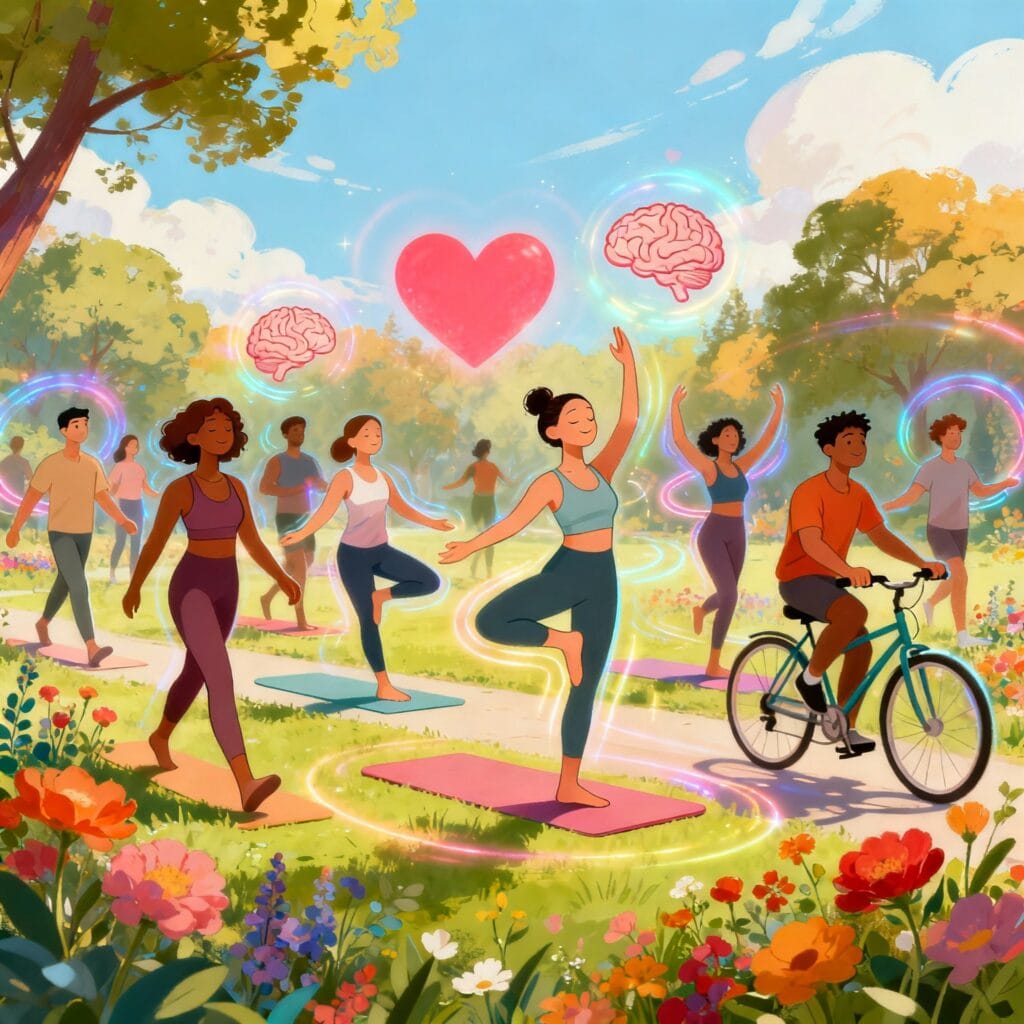
- 🚶♂️ Brisk Walking: A 20–30-minute walk outdoors improves circulation and mood.
- 🧘♀️ Yoga or Light Stretching: Releases muscle tension and encourages mindfulness. Use a quality Anti-Slip Yoga Mat for comfort and balance.
- 💃 Dancing: Uplifts your spirit and triggers joy hormones while improving coordination.
- 🚴 Cycling (Indoor or Outdoor): Provides rhythm and steady movement that clears your thoughts.
- ⏱️ Short Online Workouts: Ten-minute guided routines can fit easily into a busy schedule.
Even if you’re recovering from stress or working long hours, try adding movement breaks. Stand up, stretch, and breathe deeply for 60 seconds every hour — this small act can noticeably lift your energy.
🛍️ Helpful Wellness Tools to Support Your Routine
Starting a healthy movement habit becomes easier when you have the right accessories and motivation aids. Here are a few reliable options you can explore:
- Yoga Mat – A comfortable, non-slip surface for stretching, meditation, or home workouts.*
- Ashwagandha Supplements – Traditionally used to support relaxation and recovery.*
- The 5-Minute Gratitude Journal – Track daily gratitude and mindfulness easily.*
- The CBD Oil Miracle (Book) – Learn natural approaches to relaxation and stress balance.*
- Sensory Fidget Board Toy – Helpful for gentle focus and anxiety relief.*
🌟 Exercise with Mindfulness
Combine physical movement with deep, conscious breathing. Try this quick mindful routine: take a five-minute walk focusing only on your steps and breath. Then sit quietly for three minutes, eyes closed, observing each inhale and exhale. This resets your mind, lowers tension, and strengthens your mind-body awareness.
Mindful exercise teaches you to notice sensations instead of judging them. Over time, it can cultivate patience and gratitude — two essential qualities for emotional resilience.
📅 How to Build a Lasting Habit — Without Pressure
Start small and stay realistic. Research shows that consistency beats intensity. Even ten minutes daily is enough to create positive neural patterns associated with calmness and motivation. Gradually, your body will begin to crave movement because it links it with pleasure and relief.
To keep yourself inspired, schedule exercise like an appointment — same time each day — and reward yourself afterward with music or a peaceful tea break. You can also note your progress in your gratitude journal to observe changes in your mood and focus.
🤝 The Social Side of Movement
Physical activity doesn’t have to be a solo journey. Group walks, dance classes, or community sports build a sense of belonging that protects against loneliness — a major factor affecting mental health. Encouragement from peers reinforces motivation, and laughter shared during activity releases even more endorphins.
🌈 Balancing Rest and Recovery
While movement energizes the mind, recovery allows it to grow stronger. Stretch gently after workouts and ensure hydration. If your muscles feel tight, light yoga or slow breathing before sleep can help you unwind. Consistent rest ensures that exercise remains uplifting, not exhausting.
For restful nights, you can explore Vicks ZzzQuil Natura Melatonin Gummies — a gentle, non-addictive supplement for better sleep.*
✨ Final Thought
Exercise is one of the simplest and most natural mental-health boosters available — and it’s completely free. You don’t have to chase perfection; progress counts. Start where you are, move a little each day, and notice how your body and emotions begin to align. Every step you take is a quiet message to your mind: “I’m healing, I’m growing, and I’m stronger than yesterday.”
Disclaimer: This article is for educational purposes only and should not replace medical or psychological advice. Always consult a qualified professional before starting any new exercise or supplement routine.
Affiliate Disclosure: Some links above are affiliate links. If you purchase through them, we may earn a small commission at no extra cost to you. This supports Mind Care Journey in providing free mental-wellness resources. Thank you for your support! ❤️