Mental Health in Humanitarian Emergencies
When bombs fall, earthquakes shake, or floods destroy homes, the physical devastation is visible. But the psychological wounds are often invisible – and they last for generations. Over 100 million people worldwide are forcibly displaced due to conflict, violence, and disasters. Each carries not just a bag of belongings, but a burden of trauma, loss, and uncertainty.
Mental Health Consequences of Emergencies
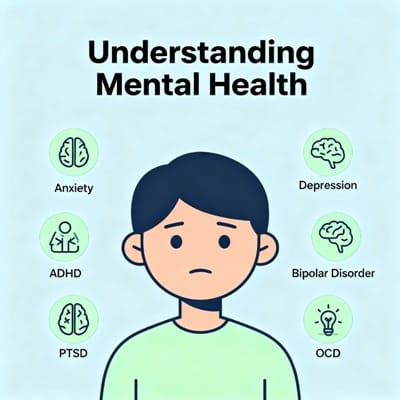
Depression
Persistent sadness, hopelessness, loss of purpose
Anxiety Disorders
Constant fear, panic attacks, hypervigilance
PTSD
Flashbacks, nightmares, avoidance of reminders
Substance Abuse
Self-medication to numb emotional pain
Grief & Prolonged Grief Disorder
Loss of loved ones, homes, identity
Who Is Most Vulnerable?
- Children and adolescents: Disrupted education, separation from parents, exposure to violence – can cause lifelong developmental harm.
- Women and girls: Heightened risk of gender-based violence, sexual assault, and exploitation in displacement camps.
- Elderly: Loss of social networks, physical frailty, and inability to flee quickly.
- People with pre-existing mental disorders: Disruption of medication and therapy; often abandoned by families.
- Humanitarian workers: Secondary traumatic stress, burnout, and compassion fatigue are common.
Psychological First Aid (PFA): The First Line of Response
Psychological First Aid is an evidence-informed approach to help people in immediate distress after a crisis. It is not professional therapy – it is humane, supportive, and practical. The core actions of PFA are:
- Look: Assess safety, urgent needs, and severe distress.
- Listen: Provide calm, compassionate presence without forcing conversation.
- Link: Connect people to basic services (food, shelter, medical care) and social supports.
PFA can be delivered by trained community volunteers, teachers, or health workers – no psychology degree required.
WHO’s mhGAP Humanitarian Intervention Guide
The World Health Organization has developed the mhGAP Humanitarian Intervention Guide (mhGAP-HIG) – a practical toolkit for non-specialist health workers to assess and manage mental health conditions in emergency settings. It covers depression, anxiety, PTSD, psychosis, epilepsy, and substance use disorders, with simple algorithms for low-resource environments.
Long-term Recovery and Resilience
Emergency mental health response is just the beginning. Long-term recovery requires:
- Community-based psychosocial support groups (safe spaces for women, youth clubs, men’s groups).
- Integrating mental health into primary health care in refugee camps and resettlement communities.
- Education and livelihood programs – restoring a sense of purpose and normalcy.
- Family reunification and legal aid to reduce chronic uncertainty.
- Training local mental health workers – culturally appropriate care is essential.
Explore More from MindCareJourney
Anxiety & Stress Mindfulness & Meditation Self-Care Trusted Resources📚 Recommended Tools & Resources for Mental Wellness
Explore handpicked products, books, and professional support to aid your mental health journey.
🧘 Mindfulness & Stress Relief (ClickBank) 📖 Best Book on Overcoming Depression 💡 Cognitive Behavioral Therapy Workbook 🌿 Natural Mood Support Supplement 🧠 Anxiety & Stress Management Kit 🛍️ Visit MindCareJourney ShopShare Your Perspective
I’ve seen children who haven’t smiled in years. Psychological first aid training should be mandatory for all humanitarian staff.
We use WHO’s mhGAP guide daily. It saves lives. But we need more mental health supervisors and long-term funding.