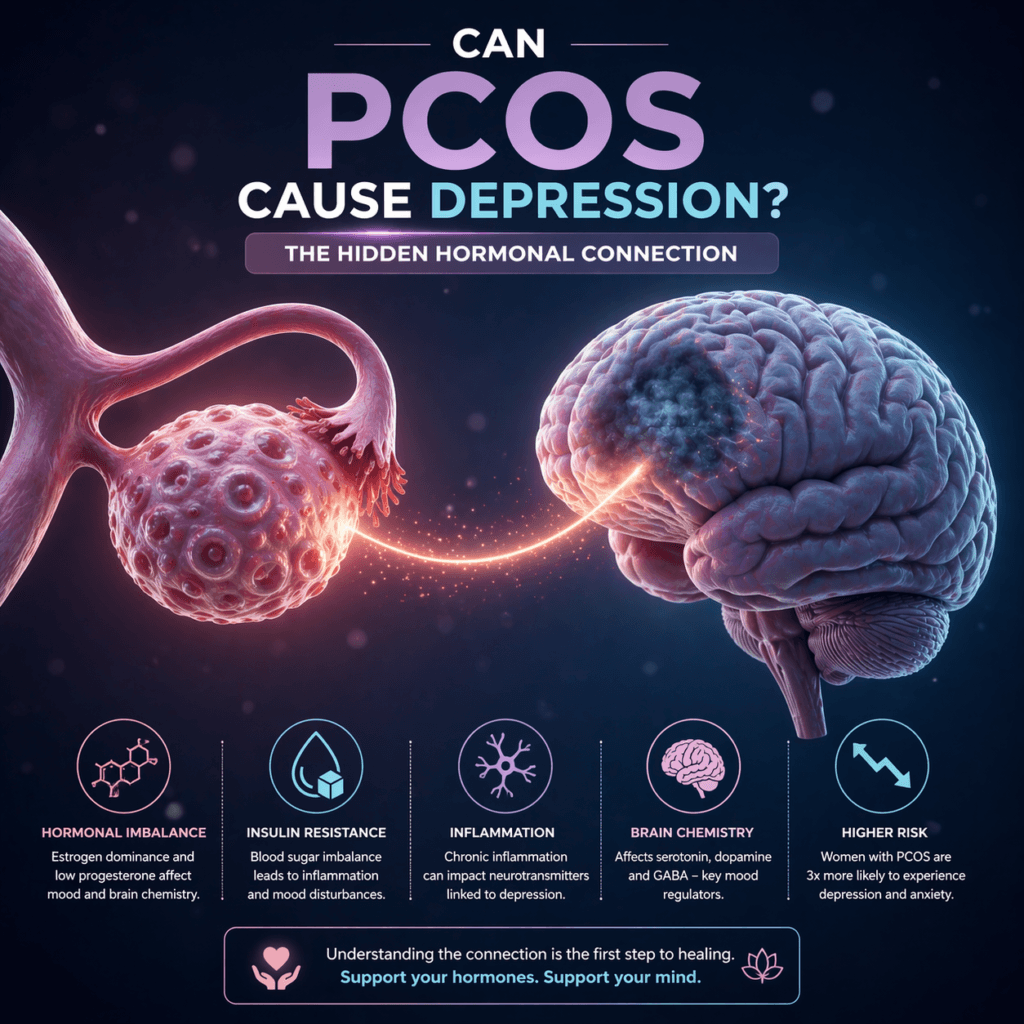
Can PCOS Cause Depression? The Hidden Hormonal Connection
📊 PCOS & Depression: The Numbers
“I was diagnosed with PCOS at 22. But no one told me it would destroy my mental health.” That’s what Anjali, a 28-year-old software engineer, shared in our community. She struggled with anxiety, rage outbursts, and a persistent sadness that didn’t lift – even when her life was going well. Her doctors focused on her irregular periods and acne. They never connected her depression to her PCOS.
Anjali’s story is painfully common. Women with PCOS are up to 3 times more likely to experience depression than women without PCOS. Yet most gynecologists never screen for mental health, and most psychiatrists never ask about PCOS.
In this post, we’ll uncover the hidden hormonal links between PCOS and depression, and show you exactly what you can do to feel better – without just being handed an antidepressant.
What Is PCOS? (A Quick Refresher)
Polycystic Ovary Syndrome (PCOS) is a hormonal disorder affecting roughly 1 in 10 women of reproductive age. It’s characterized by:
- Irregular or absent periods (lack of ovulation)
- High levels of androgens (male hormones like testosterone)
- Polycystic ovaries visible on ultrasound
- Often accompanied by insulin resistance, weight gain, and acne
But PCOS doesn’t just affect your ovaries. It affects your entire body – including your brain.
The 3 Biological Reasons PCOS Causes Depression
1. Low Progesterone (The Calming Hormone)
Because women with PCOS often don’t ovulate, they don’t produce progesterone in the second half of their cycle. As we covered in our previous post, progesterone is a natural brain relaxer. Without it, anxiety, insomnia, and depression skyrocket.
2. High Androgens (Testosterone & DHEA)
High testosterone and DHEA aren’t just physical – they affect your brain. Androgens can increase aggression, irritability, and impulsivity. They also disrupt serotonin, the “happy chemical.” Many PCOS women describe their mood as “angry depression” – a mix of rage and hopelessness.
3. Insulin Resistance & Inflammation
Up to 70% of women with PCOS have insulin resistance – their bodies don’t respond well to insulin, leading to high blood sugar and chronic inflammation. Inflammation directly affects the brain, reducing serotonin production and increasing depressive symptoms. This is why PCOS depression often improves when blood sugar stabilizes.
10 Signs Your Depression Might Be PCOS-Related
What Does the Research Say?
- A 2021 meta-analysis of 28 studies (over 15,000 women) found PCOS women have 3.2x higher odds of depression and 4.1x higher odds of anxiety.
- Another study showed that PCOS women with depression are less likely to respond to standard SSRIs – suggesting hormonal treatment is needed.
- Inositol (a supplement) has been shown to improve both PCOS symptoms and depression in multiple randomized trials.
How to Treat PCOS Depression (Without Ignoring the Root Cause)
1. Restore Progesterone
Because most PCOS women don’t ovulate, they lack progesterone. Options include:
- Natural progesterone cream (over-the-counter) – use 20-40 mg daily for 21 days, then 7 days off.
- Oral bio-identical progesterone (prescription) – more potent, but often causes drowsiness.
2. Inositol – The PCOS Depression Game-Changer
Inositol is a B-vitamin-like compound that improves insulin sensitivity and also boosts serotonin. A 40:1 ratio of myo-inositol to D-chiro-inositol is best for PCOS. Dosage: 2-4 grams per day. Studies show it reduces depression scores by 50% in PCOS women.
3. Stabilize Blood Sugar
- Eat protein and fiber with every meal
- Avoid sugar and refined carbs (they spike insulin and inflammation)
- Consider metformin (prescription) if insulin resistance is severe
- Exercise regularly – even a 20-minute walk after meals helps
4. Address Inflammation
- Omega-3 fatty acids (fish oil) reduce inflammatory markers
- Magnesium and zinc support both hormones and mood
- Sleep 7-8 hours – poor sleep worsens insulin resistance
When to See a Doctor
If you have suicidal thoughts, severe depression that lasts all month, or physical symptoms like heavy bleeding, see a doctor immediately. A reproductive psychiatrist or endocrinologist can coordinate both hormonal and mental health treatment.
Key Statistics at a Glance
| Statistic | Data | Source |
|---|---|---|
| PCOS women with depression (vs. non-PCOS women) | 3.2x higher odds | Journal of Affective Disorders, 2021 meta-analysis |
| PCOS women with anxiety | 4.1x higher odds | Journal of Affective Disorders, 2021 |
| PCOS prevalence in reproductive-age women | 10-13% | WHO / NIH |
| PCOS women with insulin resistance | ~70% | Endocrine Society |
| Improvement in depression with inositol (4g/day) | ~50% reduction in scores | European Review for Medical & Pharmacological Sciences, 2019 |
📚 Explore More on MindCare Journey
Frequently Asked Questions
Yes. Some women with “lean PCOS” or mild symptoms still have hormonal imbalances (low progesterone, high androgens) that affect mood.
Not always, but many women find their mood improves dramatically when they address the root hormonal causes. Some still need antidepressants – and that’s okay.
Generally yes, but talk to your doctor. Inositol can sometimes cause mild gastrointestinal upset.
Many women notice calmer sleep within days. Mood improvements often take 1-2 cycles.
📩 Download Your Free PCOS & Depression Guide
Get a printable PDF: symptom checklist, supplement protocol, and a 7-day meal plan to stabilize blood sugar and mood.
Yes, send me the guide →Disclaimer: This content is for informational purposes only and does not constitute medical advice. Always consult a qualified healthcare provider before starting any new treatment or supplement.
💬 Your story matters
Have PCOS and struggled with depression? What helped you? Share below – your experience could change someone’s life.
Neha from Delhi: “I suffered for 8 years before someone told me my depression was PCOS-related. Inositol and progesterone cream changed my life. I’m off antidepressants now.”
Dr. Rachel Klein, OB-GYN: “I screen every PCOS patient for depression now. Treating the hormones often treats the mood. Don’t suffer in silence.”