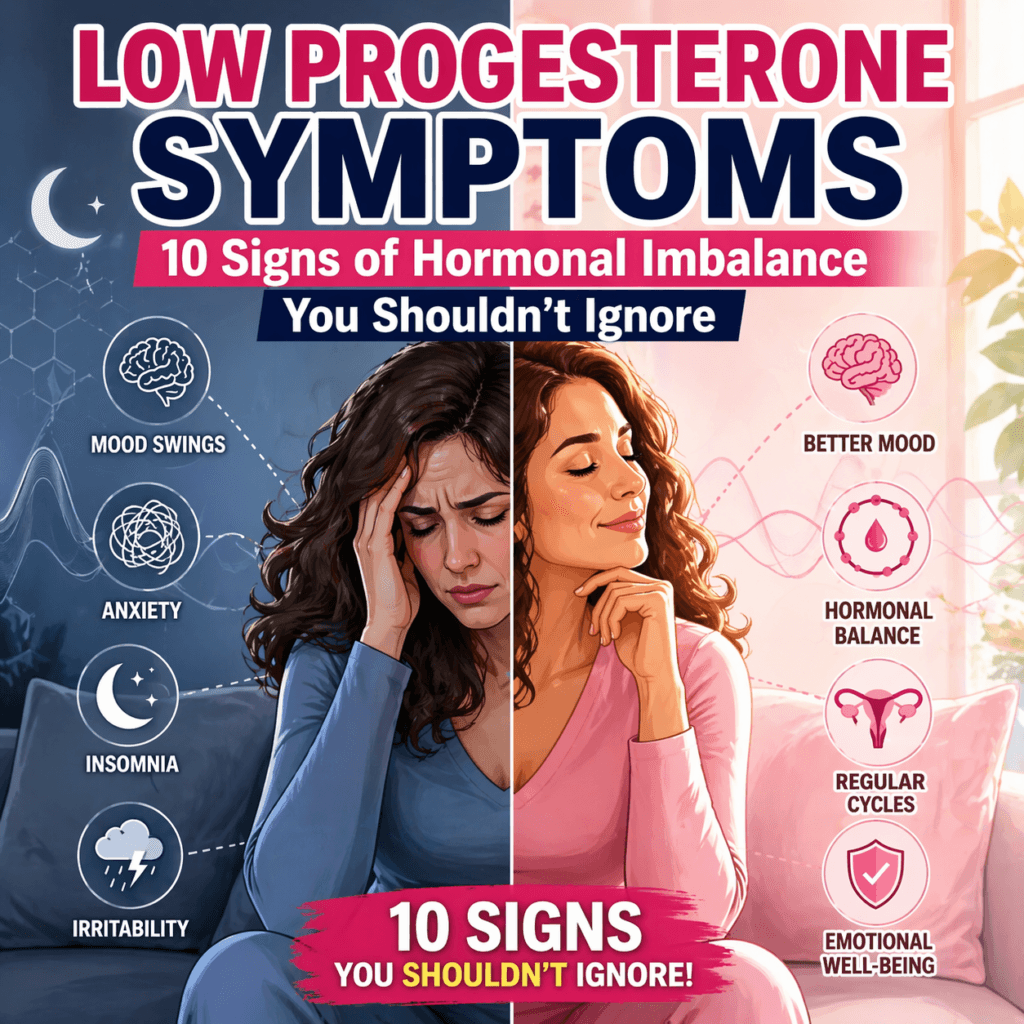
Low Progesterone Symptoms: 10 Signs of Hormonal Imbalance You Shouldn’t Ignore
📋 Low Progesterone at a Glance
*If you have 3 or more of these symptoms, low progesterone may be the cause.
“I thought I was going crazy.” That’s what Rachel, a 42-year-old marketing director, told me. Every month, two weeks before her period, she’d turn into someone she didn’t recognize. Panic attacks. Insomnia. Crying fits over nothing. Her doctor said it was “just stress” and gave her an antidepressant. It didn’t work.
Then she got her hormones tested. Her progesterone level was 1.2 ng/mL – barely detectable.
Rachel’s story is everywhere. Millions of women suffer from low progesterone symptoms without knowing it. The problem is, most doctors don’t test for it. In this post, you’ll learn the 10 most common signs of low progesterone – and exactly what to do about them.
What Is Progesterone and Why Does It Matter for Mood?
Progesterone is a female sex hormone, but its reach goes far beyond reproduction. When it enters your brain, it converts into allopregnanolone – a natural tranquilizer that boosts GABA, your brain’s calming neurotransmitter. Think of it as your body’s built-in Xanax.
When progesterone is low, your brain loses its ability to calm down. Nerve cells fire too easily, leading to anxiety, insomnia, and mood swings. This is why low progesterone symptoms often mimic generalized anxiety disorder or clinical depression – but standard antidepressants don’t fix the root cause.
The 10 Most Common Low Progesterone Symptoms (Checklist)
Take a moment to go through this list. If you check 3 or more boxes, it’s worth getting tested.
Who Is Most at Risk for Low Progesterone?
- Perimenopause (ages 35-50): Progesterone production drops first. This is why many women in their 40s suddenly develop anxiety and insomnia.
- Postpartum mothers: After birth, progesterone levels crash from 200+ ng/mL to near zero in 48 hours – a major trigger for postpartum depression.
- Women with PCOS: Lack of ovulation means no progesterone production. Depression rates in PCOS are 3x higher.
- Chronic stress: High cortisol steals the building blocks needed to make progesterone. The more stressed you are, the lower your progesterone.
- Extreme exercisers or low body fat: Your body needs fat to make hormones. Too little body fat can shut down progesterone production.
Low Progesterone vs. Estrogen Dominance – What’s the Difference?
Low progesterone often goes hand-in-hand with estrogen dominance – a state where estrogen is high relative to progesterone. Symptoms overlap, but there are differences:
| Low Progesterone Symptoms | Estrogen Dominance Symptoms |
|---|---|
| Anxiety, insomnia, depression before period | Heavy bleeding, breast tenderness, fibroids |
| Spotting before period | Water retention, bloating, migraines |
| Brain fog, low libido | Gallbladder issues, hair thinning |
The good news: both conditions can be improved by increasing progesterone (naturally or via cream) and supporting liver detoxification.
How to Get Tested for Low Progesterone (Don’t Guess)
If you suspect low progesterone, ask your doctor for a simple blood test. For best results, test on day 21 of your cycle (or day 7 if your cycles are irregular). Optimal luteal phase progesterone is above 10 ng/mL. Many women with depression have levels below 2.
If your doctor refuses, you can order an at-home hormone test (like LetsGetChecked or Everlywell) – but follow up with a professional for interpretation.
Natural Ways to Boost Progesterone (3 Steps)
1. Natural Progesterone Cream
Over-the-counter USP progesterone cream (from wild yam) is the most direct way to raise levels. Apply 20-40 mg once daily on days 14-28 of your cycle.
2. Lifestyle & Nutrient Support
- Reduce stress: High cortisol blocks progesterone. Try 10 minutes of deep breathing or yoga daily.
- Eat healthy fats: Avocado, nuts, seeds, olive oil – your body needs cholesterol to make progesterone.
- Supplement wisely: Vitamin B6, magnesium, zinc, and vitamin C all support progesterone production.
- Sleep 7-8 hours: Hormone repair happens at night. No phone in bed.
3. Prescription Bio-identical Progesterone (For Severe Cases)
If cream and lifestyle aren’t enough, your doctor can prescribe micronized progesterone (Prometrium). It’s more potent and well-absorbed, but requires a prescription. Take it at night because it causes drowsiness.
When to See a Doctor
If you have suicidal thoughts, severe depression that lasts all month, or physical symptoms like heavy bleeding, see a doctor immediately. Low progesterone is rarely dangerous alone, but it can coexist with thyroid disorders, PCOS, or other conditions that need medical treatment.
Key Statistics at a Glance
| Statistic | Data | Source |
|---|---|---|
| Women with depression vs. men (lifetime risk) | 10-25% vs. 5-12% | WHO 2025 |
| Global adults reporting extreme stress (2024) | 37% | Gallup |
| Risk reduction for postpartum depression per 1 ng/mL ALLO increase | 63% | PMCID: PMC11108418 |
| PCOS women with depression | 3x higher than non-PCOS | Journal of Affective Disorders, 2023 |
📚 Explore More on MindCare Journey
Frequently Asked Questions
Yes. Many women have no cycle issues but still experience severe anxiety and insomnia from low progesterone. Mood symptoms can appear first.
Many women notice calmer sleep within 3-5 days. Mood improvements often take 1-2 full cycles.
Men have very low progesterone naturally. Depression in men is rarely caused by progesterone – testosterone is usually the bigger factor.
📩 Download Your Free Low Progesterone Symptom Checklist
Get a one-page PDF with the 10 symptoms, self-assessment quiz, and a guide to talking to your doctor. Join 5,000+ women taking control of their hormones.
Yes, send me the checklist →Disclaimer: This content is for informational purposes only and does not constitute medical advice. Always consult a qualified healthcare provider before starting any new treatment or supplement.
💬 Your story matters
Have you ever experienced any of these low progesterone symptoms? What helped you? Share below – you might help someone else.
Priya from Mumbai: “I had 7 of these symptoms! My doctor put me on progesterone cream and within 2 months my anxiety is 80% better.”
Dr. Mehta, Gynecologist: “I see this daily in my clinic. Low progesterone is one of the most missed causes of ‘treatment-resistant’ depression in women.”