Thyroid and Depression Connection: Is Your Thyroid Making You Depressed?
🦋 Thyroid & Depression: Quick Facts
“I was on my third antidepressant. Nothing worked. I felt like a zombie.” That’s what James, a 41-year-old father of two, told me. He had seen three psychiatrists. They tried SSRIs, SNRIs, even an antipsychotic. His depression only got worse. Then a new doctor ordered one simple blood test: TSH.
His thyroid was barely functioning.
Within weeks of starting thyroid medication, James felt like himself again. No more brain fog. No more crushing fatigue. The depression that had stolen five years of his life was gone.
James’s story is shockingly common. Up to 40% of people with hypothyroidism have major depression, yet most are never screened. Even more alarming: standard antidepressants often fail when the root cause is thyroid dysfunction.
In this post, you’ll learn exactly how your thyroid affects your mood, which thyroid conditions mimic depression, and how to get the right testing and treatment.
What Is the Thyroid? (And Why Your Brain Needs It)
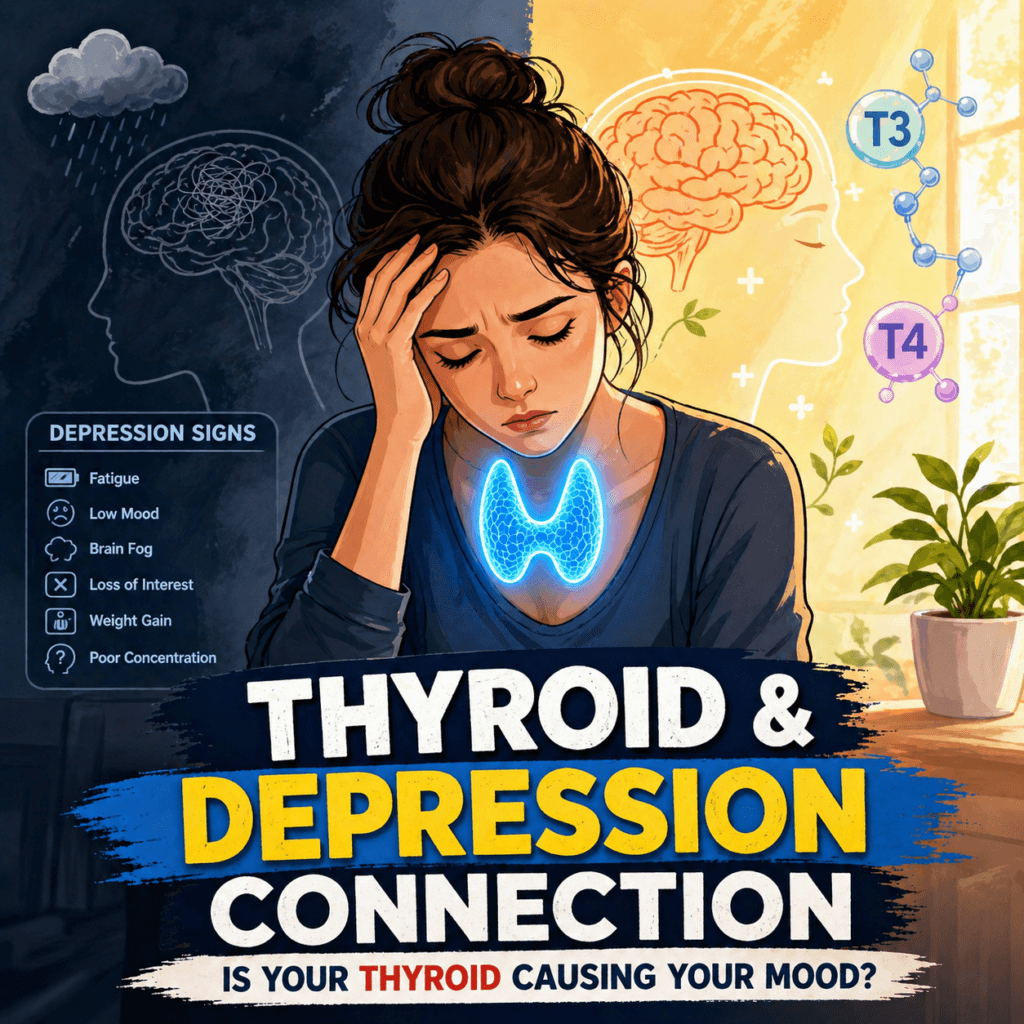
Your thyroid is a butterfly-shaped gland in your neck. It produces two main hormones: T4 (thyroxine, the inactive form) and T3 (triiodothyronine, the active form). T3 is the key: it enters your brain and directly affects neurotransmitters like serotonin, dopamine, and norepinephrine – the same chemicals targeted by antidepressants.
When your thyroid is underactive (hypothyroidism), T3 levels drop. The result: slower brain function, low mood, fatigue, and cognitive impairment. In many cases, this looks exactly like clinical depression.
The 3 Thyroid Conditions That Cause Depression
1. Overt Hypothyroidism (High TSH, Low T4/T3)
This is when your thyroid isn’t producing enough hormone. Symptoms include weight gain, cold intolerance, constipation, fatigue, and – crucially – depression. Depression is often the first symptom noticed.
2. Subclinical Hypothyroidism (Mildly High TSH, Normal T4)
This is a “borderline” condition that many doctors ignore. But research shows that even subclinical hypothyroidism can cause depression, fatigue, and brain fog – and treatment with thyroid hormone often improves mood.
3. Hashimoto’s Thyroiditis (Autoimmune Thyroid Disease)
Hashimoto’s is an autoimmune condition where your body attacks your thyroid. It’s the most common cause of hypothyroidism in developed countries. Even with normal thyroid hormone levels, the chronic inflammation from Hashimoto’s can cause depression and anxiety. Testing thyroid antibodies (TPOAb, TgAb) is essential.
10 Signs Your Depression Might Be Thyroid-Related
Why Standard Antidepressants Often Fail in Thyroid-Related Depression
SSRIs like Prozac, Zoloft, and Lexapro work by increasing serotonin. But when your thyroid is low, your entire brain metabolism is slow – not just serotonin. You could have plenty of serotonin, but your brain can’t use it effectively. It’s like having a car with a full tank of gas but a dead battery. Thyroid medication “jump-starts” the engine.
A 2018 study found that adding thyroid hormone (T3) to standard antidepressants improved outcomes in 50-70% of treatment-resistant depressed patients – even those with normal thyroid labs.
What Tests Should You Ask For?
Most doctors only test TSH. That’s not enough. Ask for this full panel:
- TSH (thyroid stimulating hormone) – optimal range: 0.5-2.5 mIU/L (many labs say up to 4.5 is normal, but symptoms often start above 2.5)
- Free T4 – optimal in upper half of range
- Free T3 – optimal in upper half of range (this is the active form your brain needs)
- Thyroid antibodies (TPOAb, TgAb) – to check for Hashimoto’s
How to Treat Thyroid-Related Depression
1. Thyroid Hormone Replacement (Prescription)
The standard treatment is levothyroxine (T4 only). But some patients do better with desiccated thyroid (T4+T3) or liothyronine (T3 only). T3 crosses the blood-brain barrier more easily and may be more effective for depression.
2. Supplements That Support Thyroid Function
3. Lifestyle Support for Thyroid Health
- Reduce stress: Chronic high cortisol suppresses thyroid function.
- Eat enough protein and healthy fats: Your thyroid needs building blocks.
- Avoid goitrogens in excess: Raw cruciferous vegetables (kale, broccoli, cauliflower) can interfere with thyroid function if eaten in huge amounts. Cooking reduces this effect.
- Get enough sleep: Thyroid hormone production follows a circadian rhythm.
When to See a Doctor
If you have any of the symptoms above – especially treatment-resistant depression – ask your doctor for a full thyroid panel. If your doctor refuses, find a functional medicine doctor or an endocrinologist who specializes in thyroid disorders.
Key Statistics at a Glance
| Statistic | Data | Source |
|---|---|---|
| Hypothyroid patients with major depression | Up to 40% | American Thyroid Association |
| Treatment-resistant depression patients with thyroid dysfunction | 30-50% | JAMA Psychiatry, 2020 |
| Improvement in depression when T3 added to antidepressants | 50-70% | Journal of Clinical Psychiatry, 2018 |
| Women with Hashimoto’s (much more common than men) | 5-10% of women | NIH |
| Prevalence of undiagnosed hypothyroidism in depressed patients | ~10% | British Journal of Psychiatry |
📚 Explore More on MindCare Journey
Frequently Asked Questions
Yes. Hyperthyroidism more commonly causes anxiety, but some people experience depression, especially older adults. It’s less common than hypothyroidism-related depression.
Many people notice improved energy within 2-3 weeks. Mood improvements often take 4-8 weeks. Full benefits may take 3-6 months.
Yes. In fact, adding T3 to SSRIs is a well-studied treatment for resistant depression. Always tell your doctor about all medications.
Many experts believe the normal range is too broad. A TSH above 2.5 with symptoms may warrant a trial of low-dose thyroid medication. Find a doctor who listens.
📩 Download Your Free Thyroid & Depression Guide
Get a printable PDF: symptom checklist, the exact lab tests to ask for, and a doctor conversation guide. Join 5,000+ people taking control of their health.
Yes, send me the guide →Disclaimer: This content is for informational purposes only and does not constitute medical advice. Always consult a qualified healthcare provider before starting any new treatment or supplement.
💬 Your story matters
Has your thyroid ever been tested? Did treating it help your depression? Share your experience – you could help someone who’s struggling.
Michael from Ohio: “I was diagnosed with depression for 10 years. Turned out I had Hashimoto’s. After starting thyroid meds, my ‘depression’ disappeared. I’m angry it took so long.”
Dr. Priya Sharma, Endocrinologist: “I see this every week. Always check thyroid before prescribing antidepressants – especially if the patient has fatigue, weight gain, or cold intolerance.”