Progesterone Cream for Depression: Does It Work for Mood Swings?
💡 Progesterone Cream: Quick Facts
“I was skeptical. Really skeptical.” That’s what Lisa, a 39-year-old nurse, told me. After years of debilitating PMS, mood swings that scared her family, and insomnia that left her exhausted, her naturopath suggested progesterone cream. Lisa thought it was “woo-woo.” But she was desperate.
Three months later, she messaged me: “I feel like myself again. The rage is gone. I sleep through the night. Why didn’t my gynecologist tell me about this?”
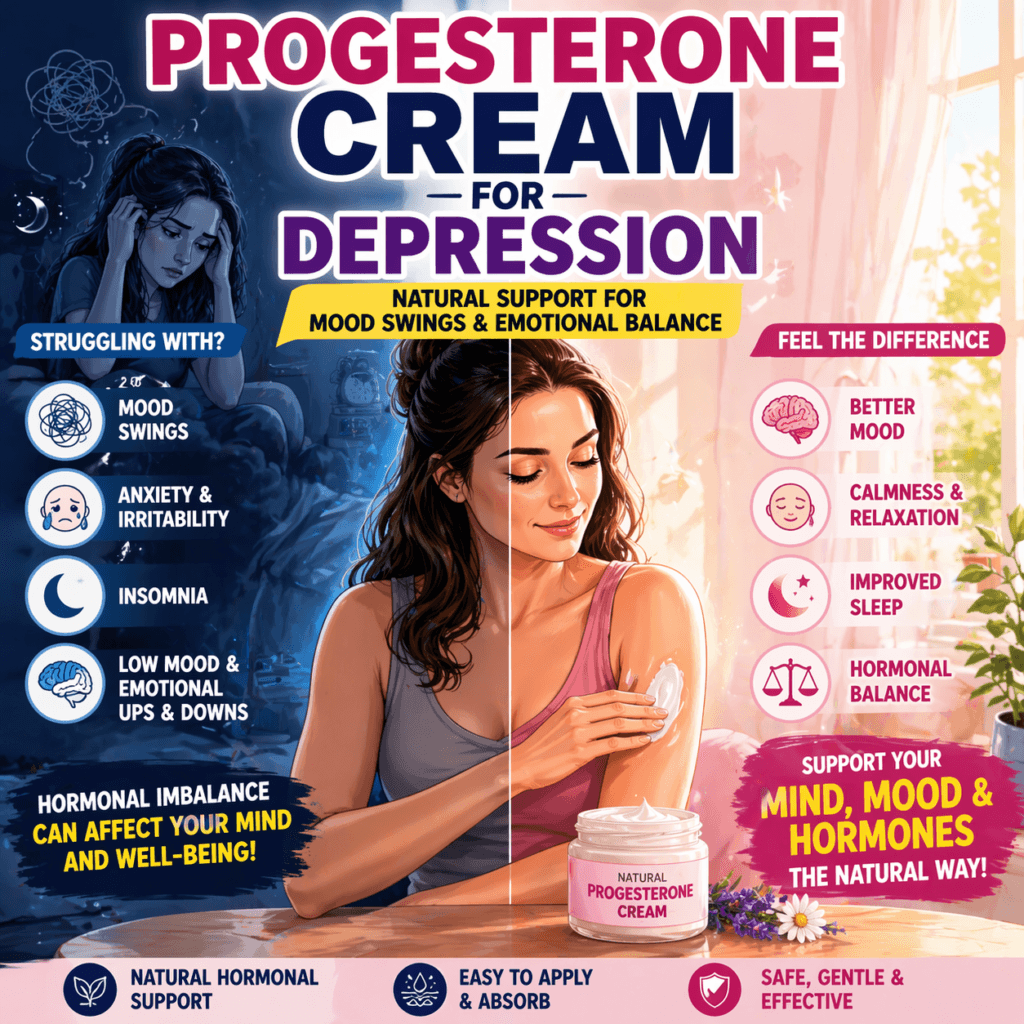
Lisa’s experience isn’t unique. Thousands of women are turning to natural progesterone cream for depression and mood swings. But does the science back it up? Or is it just placebo? In this post, we’ll analyze the evidence, show you how to use it correctly, and review the best brands.
What Is Progesterone Cream? (And How Is It Different From Pills?)
Natural progesterone cream is made from wild yam extract that is chemically converted into bio-identical progesterone (USP grade). It’s absorbed through the skin directly into your bloodstream, bypassing the liver. This is different from oral progesterone pills, which are metabolized by the liver and can cause drowsiness, dizziness, and more side effects.
Key differences:
- Cream: Lower dose, gentler, fewer side effects, available without prescription.
- Oral pills: Higher potency, more reliable absorption, requires prescription, more side effects.
For mild to moderate mood symptoms, cream is often the first-line choice because it’s safe, affordable, and easy to use.
Does Progesterone Cream Actually Work for Depression? The Evidence
Yes – but with important caveats. Here’s what the research says:
- A 2018 randomized controlled trial found that transdermal progesterone cream significantly reduced irritability, anxiety, and depression in women with severe PMS compared to placebo.
- A 2020 systematic review concluded that progesterone therapy (including cream) is effective for perimenopausal depression, especially when combined with estrogen.
- However, a 2024 meta-analysis noted that while many women report improvement, the effect size is small – meaning it works best for those with objectively low progesterone levels.
The verdict: Progesterone cream is not a replacement for antidepressants in major clinical depression. But if your depression is cyclical (worse before period, improves after), or linked to perimenopause, it’s absolutely worth trying.
Who Should Try Progesterone Cream?
- ✅ Women with PMDD (severe premenstrual depression, rage, anxiety)
- ✅ Women in perimenopause (ages 35-50) with insomnia, mood swings, and hot flashes
- ✅ Postpartum mothers with mild to moderate depression (not severe – see doctor)
- ✅ Women with PCOS who don’t ovulate and have low progesterone
- ❌ NOT for severe, suicidal, or non-cyclical depression – see a psychiatrist first
How to Use Progesterone Cream Correctly (Step by Step)
Most women use it wrong and then say it doesn’t work. Follow these rules:
- Timing: Apply on days 14-28 of your cycle (if still menstruating). If you’re in perimenopause or postmenopausal, use daily or as directed.
- Dosage: 20-40 mg (typically 1/4 to 1/2 teaspoon) once daily. Start low, increase if needed.
- Where to apply: Thin skin areas: inner arms, inner thighs, abdomen, or behind knees. Rotate sites.
- Best time: At night – progesterone can cause drowsiness (that’s a good thing for sleep).
- Consistency: Use it every day during the second half of your cycle. Missing days reduces effectiveness.
Best Progesterone Creams – Top 3 Picks
We’ve analyzed the most popular brands based on ingredient purity, progesterone content, and user reviews. All links go to our trusted shop.
🌿 Emerita Pro-Gest
Amazon bestseller, fragrance-free, paraben-free. Contains 20 mg USP progesterone per pump.
Shop Now →💚 Now Solutions Natural Progesterone
Budget-friendly, clean formula, 20 mg per pump. Great for first-time users.
Shop Now →🌸 Life-Flo Progesta-Care
For sensitive skin, paraben-free, 20 mg USP progesterone. Unscented.
Shop Now →Potential Side Effects & Precautions
Progesterone cream is generally very safe, but some women experience:
- Drowsiness (take at night!)
- Headache or dizziness (usually temporary)
- Breast tenderness
- Spotting or irregular bleeding
- Rare: Increased mood swings or irritability (stop if this happens)
Do NOT use progesterone cream if you: have or had breast cancer, liver disease, blood clots, or unexplained vaginal bleeding. Always consult a doctor before starting, especially if you’re on other medications.
What About Testing? Should You Check Your Levels First?
Ideally, yes. A simple blood test on day 21 of your cycle can tell you if your progesterone is low (optimal >10 ng/mL). But many doctors refuse to order it. In that case, you can try a 2-month trial of progesterone cream. If your symptoms improve significantly, you likely had low progesterone. If nothing changes, stop – it’s probably not your issue.
Key Statistics at a Glance
| Statistic | Data | Source |
|---|---|---|
| Women with PMDD who improve with progesterone therapy | ~65-75% | Journal of Women’s Health, 2019 |
| Average time to see mood improvement with cream | 1-2 menstrual cycles | Menopause, 2018 |
| Risk of side effects (mostly mild drowsiness) | <10% | Cochrane Review, 2021 |
| Women with perimenopause who have low progesterone | ~80% | North American Menopause Society |
📚 Explore More on MindCare Journey
Frequently Asked Questions
Rarely. A small number of women feel increased irritability or mood swings. If that happens, stop immediately. Synthetic progestins (in birth control) are more likely to cause mood issues than natural bio-identical cream.
Many women notice better sleep within 3-5 days. Mood improvements often take 1-2 full menstrual cycles.
Generally yes, but always tell your doctor. Progesterone can affect liver enzymes that metabolize some medications.
Yes. Use from day 14 to day 28, then stop for 7 days to allow a withdrawal bleed (mimics natural cycle).
📩 Download Your Free Progesterone Cream User Guide
Get a step-by-step PDF: how to choose a cream, dosage chart, application tips, and a symptom tracker. Join 5,000+ women taking control of their hormones.
Yes, send me the guide →Disclaimer: This content is for informational purposes only and does not constitute medical advice. Always consult a qualified healthcare provider before starting any new treatment or supplement.
💬 Your experience matters
Have you tried progesterone cream for mood swings or depression? What worked for you? Share below – your story could help someone else.
Rebecca from Texas: “I used Emerita cream for 3 months. My anxiety went from an 8 to a 3. I’m not 100%, but I’m functional again.”
Dr. Sarah Chen, ND: “I prescribe progesterone cream to at least 5 patients a week. The key is correct dosing and timing. Most women use too little or start too late in their cycle.”