Why Do I Feel Sad for No Reason? The Hormonal Explanation
📖 Real story: “I have everything – so why do I cry for no reason?”
Meera, 29, from Delhi: “I have a loving husband, a good job, and a beautiful home. Yet every few weeks, a wave of sadness hits me out of nowhere. I lie in bed crying, feeling guilty because I have no ‘reason’ to be sad. I thought I was broken. Then a therapist suggested tracking my cycle. Turns out, the sadness always came 7-10 days before my period. It wasn’t me – it was my hormones.”
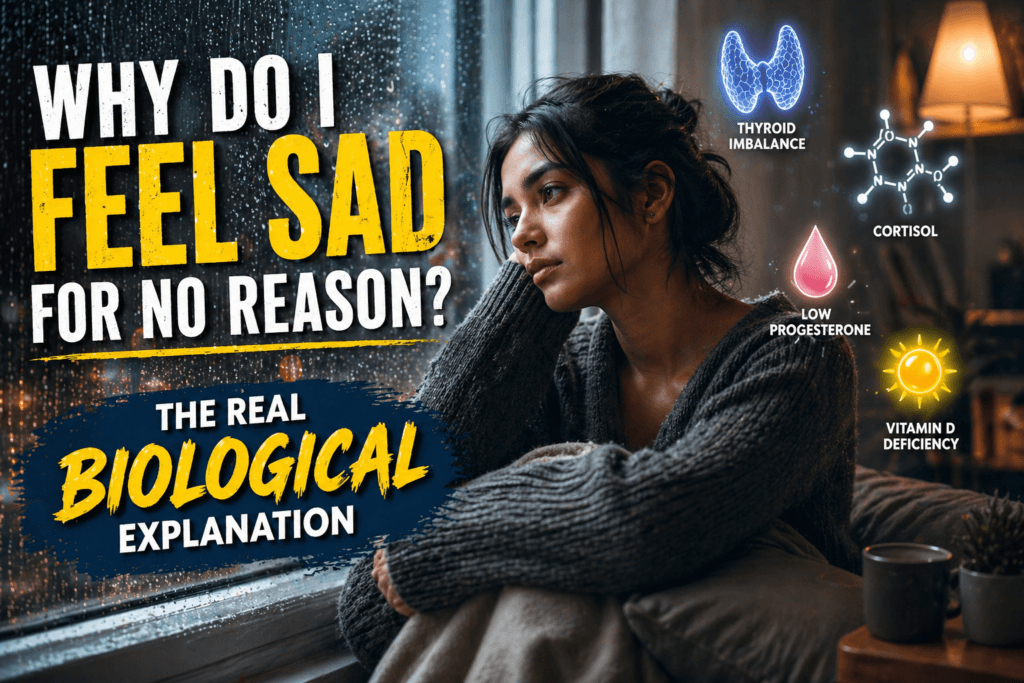
Meera’s story is incredibly common. Unexplained sadness is rarely ‘crazy’ – it’s almost always biological. Hormones, thyroid, vitamin deficiencies, and sleep deprivation are the hidden drivers.
🔍 Why You Feel Sad for ‘No Reason’
Question: “My life looks perfect on paper. So why do I feel empty, tearful, and sad for no apparent reason?”
Answer: Because your feelings aren’t always a reflection of your circumstances. They’re often a reflection of your biology – your hormones, your nutrients, your sleep, and your stress levels.
The idea that sadness must have a ‘reason’ – a breakup, a loss, a failure – is a myth. Your brain is a physical organ. When its chemistry is off, you can feel depressed even when everything in your life is going well. This isn’t a character flaw. It’s no different from feeling tired when you’re anemic or shaky when your blood sugar is low.
In this post, we’ll walk through the 5 most common biological causes of unexplained sadness – and exactly what to do about each one.
The 5 Hormonal & Biological Causes of Unexplained Sadness
1. Low Progesterone (The Calming Hormone)
As we covered in Progesterone for Depression, progesterone converts to allopregnanolone, which calms your brain. When progesterone drops (before your period, after birth, in perimenopause), anxiety and sadness appear without any external trigger. If your sadness is cyclical (worse before period), this is likely the cause.
What to do: Track your cycle. If sadness appears 7-10 days before your period, try natural progesterone cream or see a doctor for bio-identical progesterone.
2. Thyroid Dysfunction
As explained in Thyroid & Depression Connection, hypothyroidism slows down your entire brain metabolism. Fatigue, brain fog, and sadness are often the first symptoms – sometimes years before other physical signs appear.
What to do: Ask for a full thyroid panel (TSH, Free T3, Free T4, antibodies). Optimal TSH for mood is 0.5-2.5 – many labs say up to 4.5 is ‘normal’, but symptoms often start above 2.5.
3. High Cortisol (Chronic Stress)
As covered in High Cortisol Symptoms, chronic stress keeps cortisol elevated, which shrinks the hippocampus (mood center) and reduces serotonin. You may feel ‘tired but wired’ – exhausted yet unable to relax.
What to do: Morning sunlight, adaptogens (ashwagandha, rhodiola), magnesium, and setting boundaries. Consider a 4-point salivary cortisol test.
4. Vitamin D or B12 Deficiency
Both deficiencies directly cause depression-like symptoms – especially fatigue, brain fog, and low mood. Vegetarians, office workers, and people in northern climates are at high risk.
What to do: Test your levels. Optimal vitamin D: 30-50 ng/mL. Optimal B12: 500-900 pg/mL. Supplement accordingly.
5. Sleep Deprivation
Chronic poor sleep raises cortisol, lowers serotonin, and increases inflammation. Many people don’t realize they’re sleep-deprived because they’ve ‘adapted’ – but the mood effects are real.
What to do: Consistent sleep/wake times, no caffeine after 2 PM, morning sunlight, and CBT-I if insomnia is chronic.
What to Do Right Now: A 3-Step Action Plan
- Step 1: Track your symptoms for 2 months. Use a mood tracker app or paper diary. Note: sleep, cycle day (if female), stress levels, and sadness intensity. Look for patterns.
- Step 2: Get tested. Ask your doctor for: TSH, Free T3, Free T4, vitamin D, vitamin B12, ferritin (iron), and hormone panel (day 21 progesterone, estradiol).
- Step 3: Address the root cause. Based on your results, supplement or treat accordingly. Don’t accept ‘normal’ ranges if you have symptoms – optimal ranges are narrower.
🎯 Top Supplements & Solutions for Unexplained Sadness
🌿 Ashwagandha Capsules
Lowers cortisol, reduces stress-related sadness & anxiety. Clinically studied adaptogen.
Buy on Amazon →🧠 ZenCortex – Brain & Hearing
Targets brain fog, mental fatigue & supports neurotransmitter balance.
Get ZenCortex →💖 His Secret Obsession
Relationship psychology tool to reduce emotional overwhelm & improve connection.
Learn More →*Always consult your doctor before starting any supplement. These recommendations are based on research and reader support.
Key Statistics at a Glance
| Statistic | Data | Source |
|---|---|---|
| Women with unexplained sadness linked to menstrual cycle | ~1 in 3 | Archives of Women’s Mental Health, 2021 |
| Hypothyroid patients with depression (often misdiagnosed) | ~40% | American Thyroid Association |
| Vitamin D deficient individuals with depression | 2x higher risk | Depression & Anxiety, 2020 |
| People with chronic insomnia who develop depression | 10x higher risk | Sleep Medicine Reviews, 2020 |
Frequently Asked Questions
Yes. Low testosterone in men causes depression, fatigue, and irritability. Thyroid issues affect men equally. And sleep deprivation, vitamin deficiencies, and high cortisol affect everyone regardless of gender.
Track your symptoms. If sadness comes in waves, follows a cycle (monthly, seasonal, or stress-related), and improves with lifestyle changes (sleep, sunlight, supplements), it’s likely biological. But don’t ignore therapy – both approaches work together.
Find a functional medicine doctor or an endocrinologist who understands optimal ranges – not just ‘normal’ lab ranges. TSH above 2.5, B12 below 500, or vitamin D below 30 often cause symptoms even if labs say ‘normal’.
Often yes – especially if the cause is deficiency (vitamin D, B12), lifestyle (sleep, stress), or mild hormonal imbalance. But if you have severe depression or suicidal thoughts, see a psychiatrist immediately.
📚 Essential Guides to Understand Your Biology
📩 Download Your Free ‘Why Do I Feel Sad?’ Guide
Get a printable PDF: 2-month symptom tracker, hormone testing checklist, optimal lab ranges, and a doctor conversation guide. Join 10,000+ people finding answers.
Yes, send me the guide →Disclaimer: This content is for informational purposes only and does not constitute medical advice. Always consult a qualified healthcare provider before starting any new treatment or supplement.
💬 Your story matters
Have you ever felt sad for ‘no reason’? What helped you uncover the real cause? Share below – your experience could help someone stop blaming themselves.
Ritu from Chennai: “I spent years in therapy trying to find the ‘reason’ for my sadness. Then a blood test showed my vitamin D was 12. After 3 months of supplements, the fog lifted. I wasn’t broken – I was deficient.”
Dr. Anil Kapoor, Psychiatrist: “I always tell my patients: before we assume it’s ‘all in your head’, let’s rule out what’s in your blood. Thyroid, B12, D, and iron – these four tests answer 80% of ‘unexplained’ sadness cases.”