High Cortisol Symptoms: The Stress Hormone Link to Depression & Anxiety
⚡ High Cortisol: The Hidden Epidemic
“I felt like I was running on a hamster wheel that never stopped.” That’s how Maria, a 36-year-old mother of two, described her life. She was anxious all the time, couldn’t sleep past 3 AM, and had gained 20 pounds around her belly despite eating healthy. Her doctor said it was “just stress.”
But Maria knew something was wrong. She pushed for a cortisol test. Her levels were off the charts – nearly double the normal range.
Maria had what researchers call hypercortisolism: chronically high cortisol, the body’s main stress hormone. And it was slowly destroying her mental and physical health.
In this post, you’ll learn the 10 most common high cortisol symptoms, how cortisol directly causes depression and anxiety, and most importantly – how to lower it naturally.
What Is Cortisol? (The Good, The Bad, and The Ugly)
Cortisol is produced by your adrenal glands. In healthy amounts, it follows a daily rhythm: highest in the morning to wake you up, lowest at night to help you sleep. It helps regulate blood sugar, reduce inflammation, and control your sleep-wake cycle.
The problem? Chronic psychological stress, poor sleep, high-pressure jobs, and trauma can keep cortisol elevated 24/7. When that happens, cortisol stops being helpful and becomes toxic.
10 Signs of High Cortisol (Do You Have These?)
How High Cortisol Causes Depression (The Brain Science)
Here’s what happens inside your brain when cortisol stays high for too long:
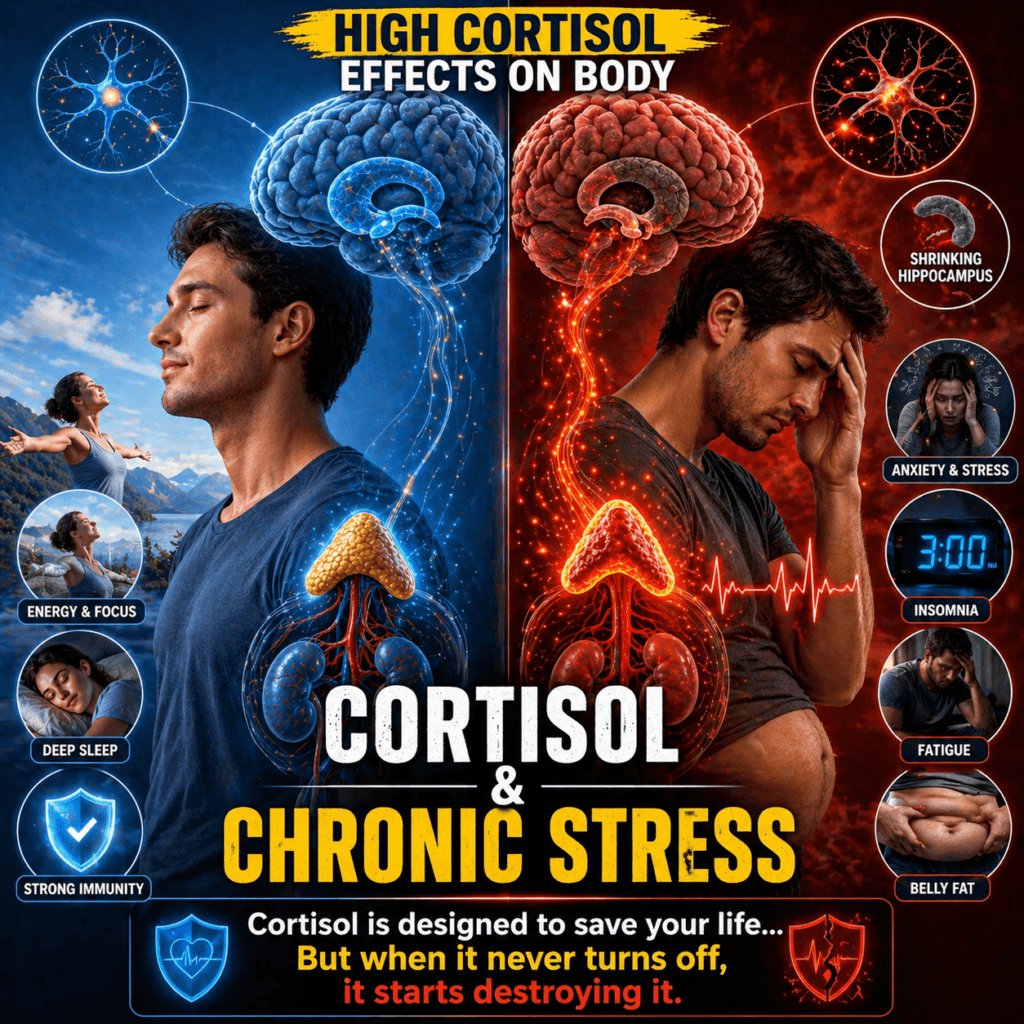
- It shrinks your hippocampus: The hippocampus is the brain region responsible for mood regulation and memory. Chronic cortisol exposure kills hippocampal neurons. MRI studies show depressed patients have smaller hippocampi – and the effect is directly linked to cortisol levels.
- It reduces serotonin and dopamine: High cortisol suppresses the production and release of these “feel-good” neurotransmitters – exactly why standard antidepressants sometimes fail.
- It disrupts your circadian rhythm: When cortisol is high at night, you can’t get deep sleep. Poor sleep worsens depression. It’s a vicious cycle.
- It increases inflammation: Cortisol is supposed to reduce inflammation, but chronic elevation leads to resistance – meaning inflammation rises, which is a known cause of depression.
What Causes Chronically High Cortisol?
- Chronic psychological stress: Work pressure, financial worries, relationship problems, caregiving
- Poor sleep: Sleep deprivation itself raises cortisol
- Caffeine and stimulants: Especially in the afternoon or evening
- High-intensity exercise without recovery: Overtraining can raise cortisol
- Low blood sugar or skipping meals: Your body releases cortisol to raise blood sugar
- Trauma and PTSD: Alters the HPA axis permanently in some people
- Medical conditions: Cushing’s syndrome (rare), adrenal tumors, certain medications
How to Test Your Cortisol Levels (Don’t Guess)
A single morning blood test isn’t enough – cortisol fluctuates throughout the day. The gold standard is a 4-point salivary cortisol test (waking, noon, evening, bedtime). You can order this yourself through labs like ZRT, LabCorp, or ask your doctor.
Optimal pattern: high in the morning (around 10-20 nmol/L), dropping to very low at night (below 5). Abnormal patterns include: flat line (no variation), reversed (high at night), or extremely high all day.
How to Lower Cortisol Naturally (7 Science-Backed Strategies)
1. Morning Sunlight & Evening Darkness
Get 10-15 minutes of sunlight within 30 minutes of waking. This sets your circadian rhythm. At night, dim lights and avoid blue light from screens 1-2 hours before bed.
2. Adaptogenic Herbs (Proven to Lower Cortisol)
3. Magnesium (The Relaxation Mineral)
Magnesium glycinate or threonate crosses the blood-brain barrier and calms the nervous system. Most people are deficient.
4. Phosphatidylserine (PS)
This supplement has been shown to blunt the evening cortisol spike, improving sleep and reducing anxiety. Take 300-600 mg before bed.
5. Breathwork & Meditation
Even 5 minutes of slow, deep breathing (4 seconds inhale, 6 seconds exhale) can lower cortisol immediately. Studies show mindfulness meditation reduces cortisol over 8 weeks.
6. Prioritize Sleep
Go to bed at the same time every night. Aim for 7-8 hours. Use blackout curtains and keep your bedroom cool (65-68°F).
7. Reduce Caffeine & Alcohol
Caffeine raises cortisol, especially in the afternoon. Alcohol disrupts sleep and raises cortisol the next day. Limit both.
When to See a Doctor
If you have severe symptoms like purple stretch marks, buffalo hump (fat pad on upper back), or unexplained high blood pressure, see an endocrinologist to rule out Cushing’s syndrome (a rare but serious condition). For most people, lifestyle and supplements are enough.
Key Statistics at a Glance
| Statistic | Data | Source |
|---|---|---|
| Depressed patients with elevated afternoon/evening cortisol | ~50% | Biological Psychiatry, 2018 |
| Reduction in hippocampal volume with chronic high cortisol | Up to 14% | Neuropsychopharmacology, 2017 |
| Ashwagandha cortisol reduction (vs placebo) | 25-30% | Journal of Clinical Medicine, 2020 |
| Global adults reporting extreme stress (2024) | 37% | Gallup |
| Women reporting higher stress than men | 36% vs 34% | Gallup 2025 |
📚 Explore More on MindCare Journey
Frequently Asked Questions
Yes. Some people with high cortisol experience “burnout depression” – exhaustion, emotional numbness, and loss of motivation without classic anxiety symptoms.
With consistent lifestyle changes (sleep, breathwork, adaptogens), many people notice improvements in 2-4 weeks. Full normalization can take 3-6 months.
Yes – but not high-intensity. Gentle exercise like walking, yoga, or light jogging lowers cortisol. Intense training without recovery can raise it.
“Adrenal fatigue” is controversial and not a medical diagnosis. High cortisol is a measurable biological state. Some people have low cortisol (adrenal insufficiency), but that’s rare. Most stressed people have high or dysregulated cortisol.
📩 Download Your Free Cortisol Reduction Guide
Get a printable PDF: 7-day cortisol-lowering plan, meal ideas, breathwork script, and supplement checklist. Join 5,000+ people reducing stress naturally.
Yes, send me the guide →Disclaimer: This content is for informational purposes only and does not constitute medical advice. Always consult a qualified healthcare provider before starting any new treatment or supplement.
💬 Your story matters
Have you experienced high cortisol symptoms? What helped you lower your stress? Share below – your story could help someone else.
James from Australia: “Ashwagandha changed my life. My cortisol was through the roof from shift work. After 2 months, I sleep normally and my anxiety is gone.”
Dr. Lisa Chen, Functional Medicine: “I test cortisol on every patient with treatment-resistant anxiety. The number of people with reversed patterns is staggering. Fixing the rhythm often fixes the mood.”